Wartime Japanese nationalist education
A Pale View of HillsWartime Japanese nationalist education is recalled as a system that taught children to regard Japan as divinely created and supreme, and to preserve approved values through disciplined instruction. In the postwar debate between Ogata-San and Shigeo Matsuda, it becomes more than a dispute over school methods: it is a struggle over what loyalty meant, what the old curriculum concealed, and whether sincere service can absolve educators of the harm their teaching helped produce.
A curriculum of national belief
Ogata-San remembers the old schools as institutions that deliberately handed down proper qualities and formed children’s attitudes toward their country and fellow citizens. In his account, teaching was bound to obligations: loyalty to family, superiors, and country gave people a shared sense of duty and held Japan together. He fears that postwar appeals to democracy have displaced those bonds with selfishness, leaving young people without a common moral inheritance.
His defense is not simply a preference for familiar school routines. Ogata-San describes an educational system that had been nurtured and cherished over many years, and presents its purpose as shaping character as well as imparting knowledge. He regards the American-led dismantling of the system and the adoption of American educational practices as a destruction undertaken without proper understanding. The replacement, in his view, has removed valuable instruction and weakened the social ties that schooling once reinforced.
Textbooks, history, and unquestioned obedience
Ogata-San’s account carries an important contradiction. He remembers being taught that Japan had been created by the gods and was divine and supreme; pupils had to memorize the textbook word for word. He offers this recollection as evidence that some elements of the old curriculum were rightly lost. The example makes the nationalist education he otherwise defends visible in concrete form: a prescribed national story was not merely presented to children but required to be learned verbatim.
Matsuda’s criticism goes further than identifying inaccurate or exaggerated history. He argues that children were taught damaging lies and, most dangerously, were taught not to see or question. He links that training to the disaster into which the country was plunged. The disagreement therefore concerns both what students learned and the habits of judgment the school system cultivated. For Ogata-San, the loss of national history is a symptom of postwar educational decline; for Matsuda, instruction that suppresses questioning is itself part of the historical failure that must be confronted.
The postwar argument over responsibility
The conflict emerges in a longer debate about schools and social change. At dinner, Ogata-San recounts finding a teachers’ periodical in a Nagasaki library and being surprised to see his name in an article by his friend Matsuda. The periodical’s tone strikes him as evidence of a changed professional climate, one in which teachers seem to him to have become communists. Jiro responds that communism is growing in the country. The exchange places Ogata-San’s personal defense of his career within a wider postwar contest over education and political belief.
When Jiro suggests that the old system also had faults, Ogata-San asks whether he has taken the view from a newspaper. Jiro instead recalls his own schooling: the divine origin of Japan, national supremacy, and compulsory word-for-word memorization. His response challenges Ogata-San from within the family conversation, using a remembered classroom lesson to show why educational change cannot be dismissed as simple imitation of America.
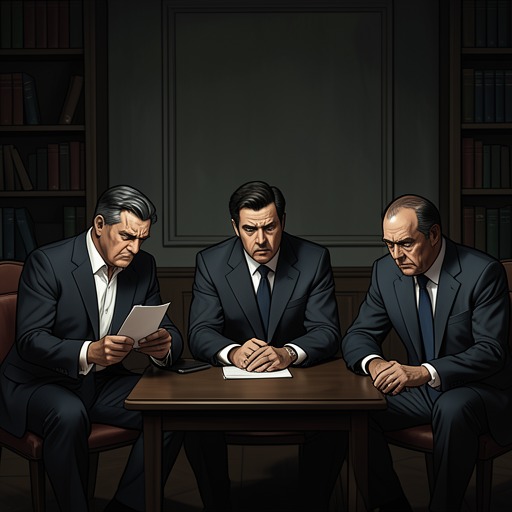
Matsuda’s confrontation with Ogata-San makes the question of responsibility more direct. Matsuda insists that he still believes what he wrote, while acknowledging that Ogata-San and men like Dr Endo were sincere and hardworking. His distinction is between intention and consequence: their energies, he argues, were spent in a misguided and evil direction, even if they did not understand where it would lead. He also refuses to treat ignorance as a complete defense, while allowing that few people at the time could foresee the consequences and that those who spoke out were imprisoned.
The Nishizaka case and the legacy of the old schools
Matsuda supports his criticism with a specific episode from Ogata-San’s career: the sacking and imprisonment of five teachers at Nishizaka, in April of a year left incomplete in the account. He identifies the men’s release as part of the new political moment, saying they would help lead the country toward a new dawn. The example changes the argument from a disagreement over textbook content into a question of institutional power: the old educational order did not only transmit ideas but could also punish teachers whose views or conduct brought them into conflict with authority.
Ogata-San rejects Matsuda’s interpretation of defeat. Losing the war, he argues, resulted from an insufficiency of guns and tanks, not from cowardice or a shallow society. He emphasizes the labor devoted by himself, Dr Endo, and others to preserving and passing on values. Matsuda does not deny their effort; instead, he challenges the direction and effects of that effort. Their exchange thus leaves sincerity and historical responsibility in tension rather than allowing either to cancel the other.
Meaning and unresolved judgment
Wartime Japanese nationalist education stands at the center of competing postwar accounts of national recovery. Ogata-San sees the destruction of the former system as the loss of discipline, loyalty, historical knowledge, and communal duty. Matsuda sees its unquestioned national myths and suppression of critical thought as part of the path to catastrophe. Jiro’s memory of memorizing a divine national origin gives the dispute a personal, classroom-level detail that resists either side’s broad generalization.
The closing gesture offers no settled verdict. After Matsuda leaves, Ogata-San watches him disappear down the hill, remains silent for several moments, then turns with a smile around his eyes and remarks on how confident young men are, adding that he supposes he was once much the same. His composure softens the confrontation without answering it. The old teacher can recognize his former certainty in Matsuda, but the remembered dispute over Nishizaka and the curriculum remains: devotion may explain the past, yet it cannot by itself determine whether what was passed down should be defended.